Some people are calling this the Seinfeld election -- an election about nothing. I don't see a significant change in the parties since the 2019 election, even if 2 of the parties with seats in the last parliament have changed leaders (Conservatives, Greens).
On the other hand, I have changed. I started self-directed anti-racism learning in 2020. Some of what I had to say about the 2019 general election applies today, but I have a very different lens when looking at Canada.
While I have read several relevant books in the last 14 months, there are two written by Arthur Manuel which I believe are particularly relevant to this election.
Arthur Manual (1951 – January 11, 2017) wrote about some of the general history of colonialism against this continent, but focused on events he and his father George Manuel (February 21, 1921 – November 15, 1989) had personal experience with.
While many try to put colonialism and the genocide that inevitably comes from colonialism into some distant past, the real story starts in the Roaring Racist 1920's and continues to this day.
Liberal Party of Canada, and the Trudeau Family
I was born in 1968, and my father in 1936. Justin Trudeau was born in 1971 and his father in 1919. We and our fathers are of comparable generations, and thus could have had similar experiences. We didn't.
The second book includes a quote from Leo Tolstoy (From "What Then Must We Do?") that was included in the 1983 Penner Report (PDF) on Indian(sic) Self-government in Canada.
I sit on a man's back choking him and making him carry me and yet assure myself and others that I am sorry for him and wish to lighten his load by all possible means -- except by getting off his back.
(Note: The picture of Trudeau on the back of a black boy was fake, but for obvious reasons given Trudeau's personality and continuous expressions of entitlement and White Privilege we all believed it was true)
Canadian governments were unilaterally imposed on this homeland by the British as an ongoing act of overt racism and white supremacy. Canada continues to push Indigenous peoples down so they can't built back their nations and economies.
I don't, however, believe that quote applies to all Canadian Prime Ministers and the governments they lead. Of all the Prime Ministers of Canada, with all the ephemeral parties with the word "Liberal" or "Conservative" (or sometimes both) in the party names, the above really only applies to recent Liberal PMs. Prior to that time no PM would claim to feel sorry for Indigenous peoples. They believed the only human right Indigenous Peoples should have is the right to be forcibly assimilated into European worldviews and governance systems (clear genocidal policies of "Kill the Indian, Save the Man", "Kill the Indian in the Child", stealing land and converting to European "Fee simple" property, etc, etc).
Much of these two books are dedicated to talking about P.E. Trudeau and Justin Trudeau. Each had a Trudeau Mania backing them and having them be considered "progressive", all the while they were actively carrying out overtly colonial and genocidal activities against Indigenous Peoples.
While Europeans like to believe their history is universal, European history is actually quite unique. Growing racism and related violations of human rights in the 1920's in Europe (between "world" wars and during the second) had serious implications on European colonies. This included European colonies in what the Europeans called the Americas (after Amerigo Vespucci, an Italian "explorer" who claimed to have "discovered" the continents many thousands of years after Pacific Islanders are likely to have been doing trade with peoples from this continent).
In the 1940's, Europeans finally started to better understand some human rights concepts, and in the context of the United Nations (which the Europeans actively blocked Indigenous nations from joining) started to recognize that colonialism and the inevitable genocide that it causes must be considered crimes against humanity.
This brings us to Pierre Trudeau starting in 1968. Europeans had been thinking about, started to adopt, and understand human rights in the 1950's and 1960's. We even saw a Civil Rights movement in the USA to try to gain equal rights for African Americans. Even with this context, Trudeau thought he would get away with a forced assimilation "final solution" to the alleged "Indian Problem" with the 1969 White Paper he launched along with then Minister of Indian Affairs, Jean Chrétien.
There has never been an "Indian problem", only a colonialism and genocide problem.
Also starting in the 1960's was movements towards so-called "Patriation" of the Canadian Constitution. I suspect it was concern over a growing international movement against racism and colonialism that sparked these mostly Liberal Party leaders to seek to ensure that Britain could not make Canada less racist as they did when the British abolished slavery.
Prior to the passage of the Canada Act 1982 (Please read the actual text, not what Trudeau and others claimed it was about), the UK parliament had more authority over the laws of Canada than any governing body on this side of the Atlantic. While jurisdiction was divided between the federal government and provincial government in Canada, the UK could change any legislation including the constitution.
Arthur Manual discussed the Constitution Express, where Indigenous peoples fought against the "patriation" of the constitution and the exclusion of the rights of Indigenous people. It was Trudeau yet again trying to wipe out any recognition of Indigenous rights.
It was with the lobbying in Canada and Britain that the British required a recognition of Indigenous Rights in the Canadian Constitution, and thus section 25 (Aboriginal rights and freedoms not affected by Charter), section 35 (Recognition of existing aboriginal and treaty rights), section 37 (Aboriginal peoples included in constitutional conference clarifying rights) were included in the Schedule B replacement of the Constitution.
If the Canada Act 1982 had not passed, the UK could have passed a single act of their parliament to incorporate the United Nations Declaration on the Rights of Indigenous Peoples into Canadian law in the same way that the replacement Canadian Constitution including a Charter of Rights and Freedoms was a schedule of the Canada Act 1982. Unfortunately, since Britain made that step to try to absolve itself of any responsibility for its creation and maintenance of Canada, it is now much harder to force the federal and provincial governments to honor internationally recognized human rights and international law.
I may wish that Britain would rescind the Canada Act 1982, and fix some of the problems they created, but that is politically unlikely. Canada finally fully adopting UNDRIP will require a constitutional amendment, which is unlikely in the current overtly racist climate in Canada (especially in some of the provinces).
Arthur Manuel discussed Pierre more in the first book, and then sets the record strait on Justin Trudeau in the second book.
Not discussed as much as I would have liked is additional dishonesty about UNDRIP by Justin Trudeau. Given the Canada Act 1982, it wasn't possible for the federal government to directly pass UNDRIP into Canadian law as it wouldn't be compatible with the constitution, including the division of powers. The federal government and each provincial government must carry out a process to change all the existing human rights violating laws, as well as not pass any new rights violating laws. Solving even this problem in a more permanent way to disallow parliaments to pass human rights violating laws will require a constitutional amendment.
So passing a bill to force governments to change human rights violating laws is what was tabled multiple times in the federal parliament since 2008, and a version finally received royal assent last June in the form of Bill C-15.
In typical Liberal style, Justin Trudeau campaigned in 2015 on moving forward with TRC calls to action which included moving forward with UNDRIP. This was clearly a lie. While he could have tabled a government bill immediately after the 2015 election based on Romeo Saganash's Bill C-469, he did nothing. After waiting a year, Romeo Saganash re-tabled his bill which received the number C-262 and the Liberals deliberately delayed the passage of the bill in the House of Commons and Senate. Then, again typical Liberal lies, they claimed that even though they had a majority government in the House of Commons and control of the Senate that somehow it was the Conservative party that delayed the bill.
"except by getting off his back"!
The only critique I have of either book is how statements made by then Justice Minister Jody Wilson-Raybould about UNDRIP were interpreted.
Simplistic approaches such as adopting the United Nations declaration as being Canadian law are unworkable and, respectfully, a political distraction to undertaking the hard work actually required to implement it back home in communities,
(See: Notes for an address given at an AFN meeting in July 2016, and page 72 of From Where I Stand)
Given the unfortunate passage of the Canada Act 1982, what Jody Wilson-Raybould was discussing is merely a statement of the legal situation within Canada. There is no mechanism by which the federal government could unilaterally pass a law that would allow Canada (which has multiple levels of government and a constitution) to immediately adopt UNDRIP.
These statements are sometimes merged with statements regularly repeated by Carolyn Bennett, then Minister of Indigenous and Northern Affairs (Now Crown-Indigenous Relations), starting in May 2016.
The Honourable(sic) Carolyn Bennett, Minister of Indigenous and Northern Affairs, today announced that Canada is now a full supporter, without qualification, of the United Nations Declaration on the Rights of Indigenous Peoples. Today’s announcement also reaffirms Canada’s commitment to adopt and implement the Declaration in accordance with the Canadian Constitution.
So which is it -- are there no qualifications, or will they be attempting to implement the declaration only in accordance with the Canadian Constitution which is partly responsible for the ongoing violations of human rights?
The Canadian Government had been discussing for some time the concept of a "Canadian definition of UNDRIP", which is simply not possible. There is only one Declaration from the United Nations which is UNDRIP, and that is the text
adopted by the General Assembly on Thursday, 13 September 2007. Nothing written before or after is UNDRIP, no matter what anyone claims or attempts to declare.
Canada (or some activists groups) can pretend all it wants that something other than UNDRIP is UNDRIP, but it is up to the United Nations to evaluate that -- it is not up to Canada or anybody else.
If you take these two statements together as if the Liberal party is one happy family (and we know how
happy things went for Jody Wilson-Raybould), you would think both were statements pushing back against UNDRIP. I disagree. All evidence suggests that Carolyn Bennett and Justin Trudeau are fully aware of their roles in deliberately delaying Canada coming into compliance with human rights and international law. I do not see evidence this was the case for Jody Wilson-Raybould, who was simply discussing yet another aspect of the dishonesty of the Trudeau family and the pro-colonial/genocidal aspects of the so-called "Patriation" of the Canadian Constitution.
Now... just imagine if instead of Justin Trudeau as the Liberal Party leader that it was Jody Wilson-Raybould. I know which one of these people I wish weren't running in this election, and which was. Without the fake-feminist, fake-anti-racist Trudeau barking commands from his colonial throne, we have no idea what this powerful Indigenous woman might have been able to accomplish.
I look forward to when the international embarrassment of Justin Trudeau being the Prime Minister of Canada is over.
Conservative Parties of Canada
Whether I agree or disagree with a conservative (or Conservative), they tend to believe in what they are saying and are far more honest than the Liberals. I know where they stand, and it is easier to work with (or against) them.
One of the mistakes I made in 2019 was to be too narrow in what history I was contemplating. I noticed in 2011 that many people who otherwise voted for the Bloc Québécois nominated candidate ended up voting for the NDP nominated candidate. I incorrectly put the Bloc in my discussion of left-wing parties.
Canadian conservatives have split many times since the first of 11 British North America Acts imposed the governments of Canada against the interests (or even awareness) of the majority of the population. The antiquated electoral system Canada uses which retains the concept of vote splitting forces them to regularly attempt to merge into a coalition party rather than more regularly being able to form coalition governments. Due to this I don't understand why they don't have ranked ballots as a priority reform, but what they consider priorities regularly don't make sense to me.
Western Canada has wanted to dominate Canadian politics for a long time. The Reform Party was a splinter group that formed in 1987 as a Western-Canadian protest movement, and while they separately had seats they continue to have success as it is more correct to say the Reform party took over what was previously the Progressive Conservative party than the claim they merged.
For my views on so-called Western Alienation, the basis of that protest movement, see:
Even if most of the Conservative party MPs aren't from Western Canada, this European Supremacist ideology as it relates to Indigenous peoples and this land and her resources dominates the party.
The Bloc Québécois was a splinter group of mostly Progressive Conservatives that crossed the floor to form a new party in 1991 after the failed Meech Lake Accord.
I have read Sovereign injustice: Forcible inclusion of the James Bay Crees and Cree territory into a sovereign Quebec which clarifies with considerable references the illegality of a provincial government separating from "Canada" and retaining a land base. I have done quite a bit of other anti-racism reading, and finally recognize the Quebec sovereignty movement for what it is:
Yet another White Nationalist movement.
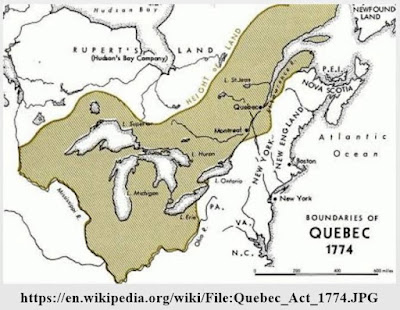
According to international law, as well as Canadian law confirmed in Supreme Court rulings, the Government of Canada doesn't exclusively own title over the land it claims to. This includes what was considered Lower Canada, part of the former colony of New France that was conquered by Britain in the Seven Years' War. The Government of Canada has even weaker title claim over the extensions it unilaterally made to Quebec in the Quebec Border extension Acts of 1898 and 1912 (or the extensions to Ontario including 1912, or the unilateral creation of Alberta and Saskatchewan in 1905, etc).
The notion that part of this land would be allowed by the international community to be conquered by a newly separated European derived government in a modern example of colonialism is absurd. If the French colonists wanted to naturalize to this homeland as the Métis did it would be an entirely different story as Indigenous peoples have a right to self-determination separate from the colonialists. There is simply no method for the French colony of Quebec (with or without the border extensions) to separate. Any attempt to forcibly do so would be met with international peacekeeping, and likely a civil war.
In the context of Canada, British Canadians, Irish Canadians, Scottish Canadians, French Canadians, Somali Canadians (, etc) are all merely part of Canadian colonial multiculturalism. I'm of Irish, Scottish and French descent, and all of these ancestors are multicultural settlers and colonists -- these groups have ancestral lands and nations in Europe, but not here.
I'm not fully convinced Canada is a legitimate nation, so obviously reject the notion that Quebec or any other colonial division can be considered a nation. There are many legitimate nations on this homeland, but none of them are of European descent. This is not Europe, and it is far past time some Europeans took their second foot off the boat.
If Quebeckers are relying on good relationships with the right-holders to the land that the Quebec government currently occupies, they had better improve that relationship quickly. The relationship thus far has been horrendous, and their government has been lying to them about it. They should not assume that if various Indigenous title holders (peoples, not individuals) are asked if they want to remain in Canada rather than be part of Quebec that they will side with Quebec and want to form treaties with French colonists.
There are other more recent conservative splinter groups running candidates in this election.
The People's Party of Canada formed after Maxime Bernier lost the 2017 leadership vote, and he embarrassed himself even further than he had when he was a Minister during the Harper Government years. He decided to form his own cult (Umm... Political party). It is hard to take anything relating to this party seriously, given candidates seem to be spending much of their campaign time protesting hospitals and the public health of fellow citizens. They seem to take memes likely originating from Russia or China as if they were fact.
The PPC platform on "Indigenous Issues", which they claim is a "New Relationship based on mutual respect", is simply a repeat of the illegal colonialist ideas expressed in P.E. Trudeau's 1969 White Paper. It is sad that our "educational system" is so poor that there are any Canadians who are so confused as to think that P.E. Trudeau's racist ideas are new or useful. I don't know how long this "party" will last.
The Maverick Party was originally called Wexit Canada, and founded in 2020. An even sadder White Nationalist version of the Bloc Quebecois, there is no ability for unilaterally imposed western provincial governments to separate from Canada and retain any land base. Without the protection of the Canadian Constitution, that land reverts to being part of the North West Territories -- which is already running a far more advanced governance system than Alberta or Saskatchewan. I may agree with the idea of ending the 116 year failed foreign workers program and replacing those governments with something less racist, but that is clearly not what Maverick is intending. Given the similarities to the Bloc (other than the floor crossing and ability to immediately send their leader to debates), I won't be surprised if they gain seats in parliament.
New Democratic Party
What I said about the party and leader in 2019 still applies in 2021.
There are individual MPs and candidates that are worthy of taking notice and supporting. Most notable in my mind are:
- Leah Gazan (Winnipeg Center). I've already maxed my federal donations to her. On twitter she calls herself "Proud Lakota", and has been an activist in this area of policy long before she considered becoming an MP.
- Matthew Green (Hamilton Center)
- Charlie Angus (Timmins-James Bay). I've known him since he became an MP and caused the NDP to do a 180decree shift on Copyright policy (temporarily bringing the party into this millennium). I have been very happy to see how well he does on Indigenous Rights, which I agree is more important.
As is typical with this mixed-bag party, I also noticed how Heather McPherson (Edmonton Strathcona) spoke at the Heritage committee. She was strongly in support of granting the department responsible for colonial "Canadian identity and values" and its industry cheerleader CRTC more control over media than it does already. As far as I'm concerned Bill C-10 will violate UNDRIP, but somehow Heather convinced her caucus to support this horrendous bill.
What needs to be said about the NDP is that when they are in government, as they have been in provinces such as BC, they don't act any different when it comes to the overt rejection of Indigenous Rights. Arthur Manual grew up on a reserve in the BC interior, and wrote about the BC provincial government throughout the books. It is an NDP government in BC that has been sending in the RCMP to forcibly and violently remove land defenders (IE: representatives of the rightful collective owners of the land - injunctions should be against the province and "developers"). As with the federal government, the NDP provincial government is trying to terminate Indigenous rights as a condition for land title negotiations.
Green Party
As a past supporter I have been sad to see the party failing. While the media has seized on the idea that the problems with the new leader relate to gender or race, it is the fact that the party has drifted even further from the Global Greens movement that is causing it problems. I will be surprised if they have any seats left in parliament after this election.
The party could have learned from having a sitting MP with close ties to east coast indigenous peoples, but failures of the new leader forced Jenica Atwin (Fredericton) to cross the floor. Failures with the NDP (top-down party structure, currently disallowing floor crossing) meant that Jenica Atwin crossed to the Liberals which was not likely the most obvious choice.
Given we can't solve problems within the same mindset/worldviews that created them, I have come to believe that decolonization is a prerequisite to solving current environmental issues on this continent -- including our contribution to climate change. The Green Party has been extremely White over the years, and the party and movement in Canada has not done the work it needs to form good relations with Indigenous Peoples. Sometimes the ideas from conservationist types within the Green movement directly conflicts with the rights and longer-term experiences and sciences of Indigenous Peoples, and this was discussed by Arthur Manuel.

I believe the green movement in Canada must adopt decolonization as a core principle, and not be pushing European environmental notions, given it is European anthropocentrism which is the core of the problem.
When it comes to sustainable economies and democratic governance, the Indigenous peoples of this continent are centuries beyond where European thought is.
We should be following and supporting Indigenous peoples, not falsely suggesting we as peoples have the necessary experience to take the lead.